





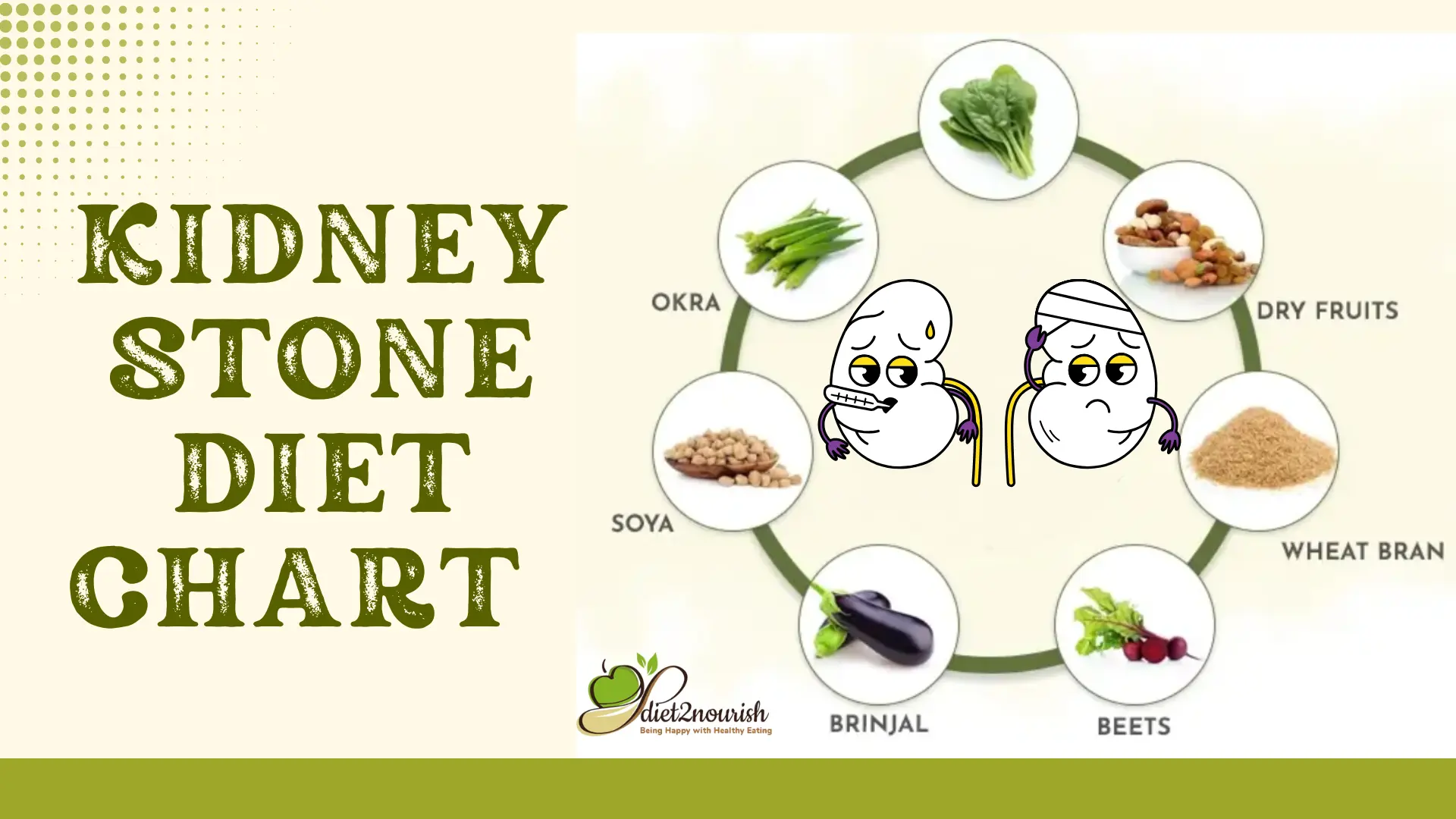
Looking for the perfect kidney stone diet chart that would help you get rid of your stones? Don’t just surf the internet for quick fixes but ask the real dieticians online. In this blog, you will find the best dietary solutions that help you in an organic way with zero side effects. But before we dive into the basics of the kidney stone diet chart, let us know about the basics that you must consider.
Kidney Stones Symptoms that you should know
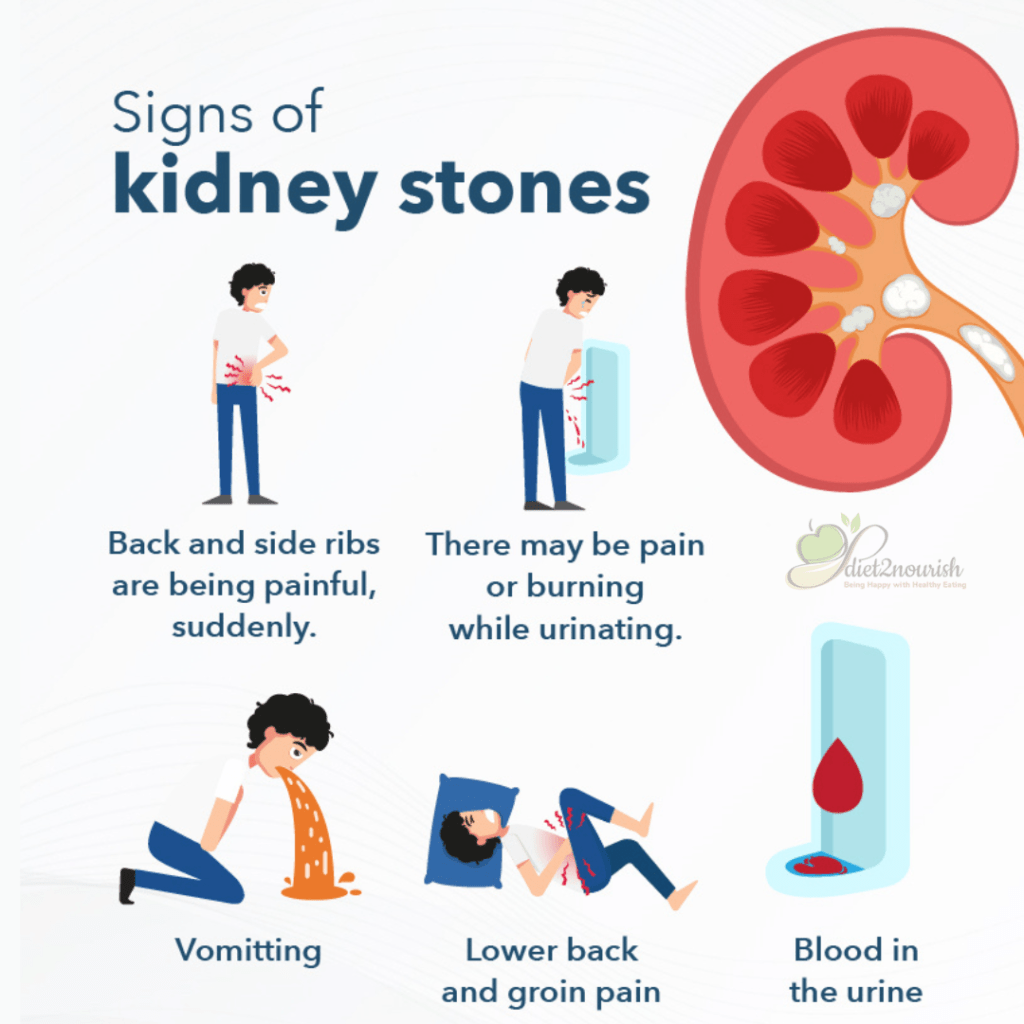
Kidney stones also called renal calculi or calculi in the kidney, will never cause any symptoms, unless it starts moving around within the kidney or passes into the ureters. If the stones are stationed at the ureters, it may get more severe, as it will block the flow of urine and cause swelling and the ureter to spasm. Some of the common signs and symptoms that you must watch for are:
- Sharp and severe pain below or at the sides of your ribs
- Pain that follows till the groin and the lower abdomen
- Pain that shows up like waves and fluctuates
- While urinating you may experience pain and a burning sensation
- Red, pink, or brown color urine
- Foul-smelling and cloudy urine
- Frequent urges to urinate and urinating in small amounts
- Nausea or vomiting
- Fever and chills if an infection develops
Nutrition management for kidney stones
Kidney stones are masses of crystals in the urine- which in normal cases would get dissolved with the urine chemicals. However, in some cases the minerals in the urine combine and form rock like substances, giving rise to kidney stones. Managing your kidney stones is vital and should mainly be done by diet.
Are all kidney stones the same?
No, there are two types of kidney stones, both of them needing varied dietary care.
Calcium oxalate stones: Most common
- Not drinking enough water can concentrate your urine, leading the minerals in it to bind and form calcium oxalate stones.
- Furthermore, a high oxalate diet or excessive sodium diet choices can also cause these kinds of stones.
- You can rather go for a healthy diet with calcium that will bind to oxalates in your gut before they even reach your kidneys.
Uric acid stones:
- The main culprit that lies in this kind of stones is a compound called “purine”. It is found in red meats and organ meats- leading to high levels of uric acid and even stones.
- To get rid of these stones, your CKD dietician will give you a kidney stone diet chart that will have healthy foods with low proteins and purines.
What kind of diet plan do dieticians suggest for kidney stones?
Mostly, it depends on the chemistry of your urine. While the exact plan is dependent on the type of stone you’ve had. Thus, most of the renal dietitians follow a specific blueprint.
The most common formal diet suggested for kidney stone prevention is the DASH Diet (Dietary Approaches to Stop Hypertension). Although it caters for your blood pressure, modern day research shows that it can reduce stone risk by up to 45%.
1. The “Golden Rule” of Hydration
In case of kidney stone formation, you will need to produce 2.5 liters of urine a day- that’s what the kidney dieticians believe. It is crucial for the low oxalate diet for kidney stones.
2. The Calcium-Oxalate Balance (The Buddy System)
- In the past, people were told to avoid calcium. Modern science says the opposite with the calcium oxalate kidney stones diet.
- However, evidence for such a diet claims that you should rather eat calcium foods at the same time as foods with oxalate.
- Why? When you eat them together, the calcium and oxalate bind to each other in your stomach and leave the body as waste, rather than traveling to your kidneys to form a stone.
3. Sodium and Protein Management
- High salt intake forces more calcium into your urine- raising the risk. Dietitians give a range under 2,300mg which is about 1 teaspoon of salt per day.
- In addition, too much red meat, poultry, and eggs can raise your uric acid levels while they lower citrate levels making them the worst foods that cause kidney stones.
- In such a case, you may rather switch your meats with plant-based proteins for the greater good.
5 Best foods for a kidney stone diet chart
When looking out for your kidney health, you must eat these foods:
● Coconut water:
This fluid will not only hydrate your body but also will balance the electrolytes in your body- hence, reducing stone risk
● Cucumber:
Cucumber is not just a veggie or a kidney stones food to eat but an ideal key to a low oxalate food option, that is also high in water content. All this to help your body flush out toxins with managing the risk of stones.
● Barley (Jau):
Fiber and antioxidants in this grain can actually lower your oxalate levels and help you with your digestion at the same time.
● Low-oxalate greens
You can go for greens that are low in oxalates such as lettuce. You may get your vital nutrients with zero to no stone risk
● Watermelon:
This hydrating fruit is quite low in its oxalate content and supports kidney health in more than ten ways.
Vegetables good for kidney stones
are cruciferous vegetables and lemons. Cruciferous vegetables like Brussels Sprouts, Broccoli, and Kale help decrease calcium loss and stop the formation of kidney stones. These are the foods that have antioxidants that can help prevent you from having bladder, prostate, and kidney cancers. Lemons on the other hand contain citric acid that stops the formation of kidney stones and also aids in breaking the existing stones.
The Best Fruits for a kidney stone
are plums, peaches, apricot, lychees, mangoes, and cherries. Apart from being delicious, they are the best fruits to have with kidney stones. These fruits are versatile, promoting your overall health and also satisfying your sweet tooth.
Whole grains are great for maintaining a healthy weight and also for the treatment and prevention of kidney stones. They are a must in any renal calculi diet/renal stone diet.
Water is not a food but is the most essential beverage for people with kidney stones. A minimum of three liters of water is recommended each day.
Foods to avoid kidney stones
This is a tabular presentation of the main foods to avoid with kidney stones that should not be included in your diet.
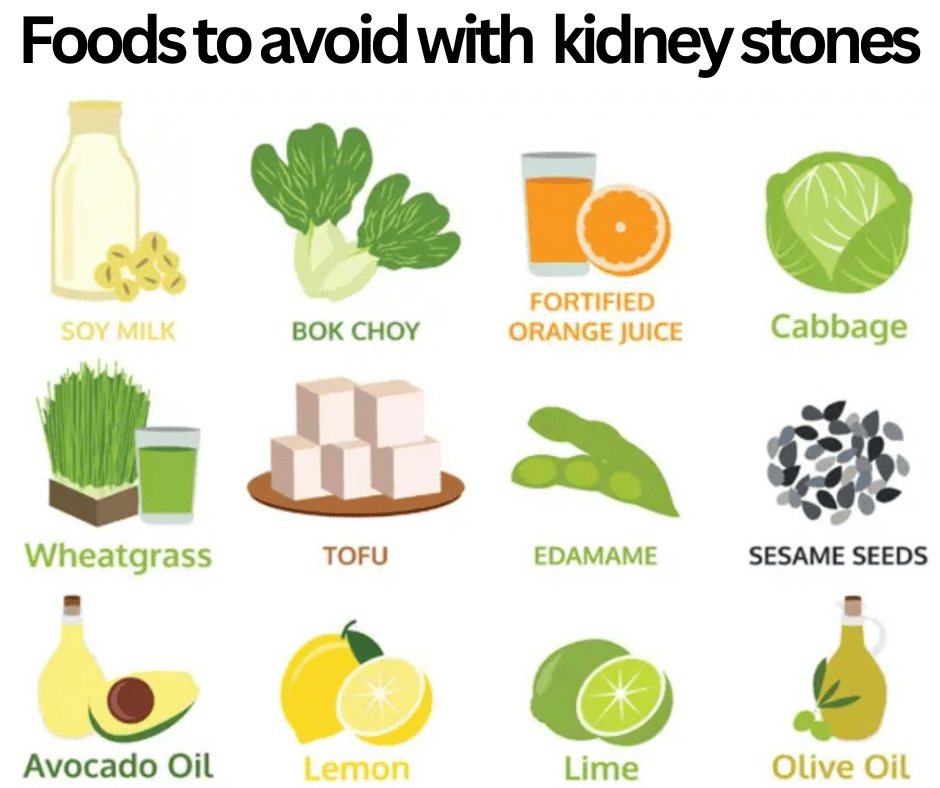
caused by uric acid are Red Meats, Organ Meats, Sardines, Anchovies, and other Shell Fishes, Beer and other alcoholic beverages, and all meat-based gravies.
Kidney stones can form when there are high levels of calcium, oxalate, and uric acid in urine. These substances can form crystals that can stick together and form a stone.
Eating certain foods can increase the levels of these substances. Hence, the risk of developing kidney stones.
Some of the most common foods that might cause kidney stones
If you have kidney stones, based on the type of kidney stone you have, you may have to change the way you eat and what you eat. You will have to reduce or omit the foods that cause kidney stones.
1. Foods high in oxalate
Foods to avoid with kidney stones particularly include foods that are high in oxalate. They are spinach, rhubarb, beets, nuts, chocolate, and tea.
2. For Uric Acid Stones
Chicken, Eggs, Shell Fishes, Milk, Cheese, and Dairy products, Legumes like Beans, Lentils, Dried Peas, Peanuts, Soy and Soy products, Tofu, Nuts, and Nuts Products, and Sunflower Seeds.
3. For Calcium Phosphate Stones
Sodium is found in canned, packaged, and fast foods, Chicken, Meat, and Organ Meats, Eggs, Shell Fishes, Milk, Cheese, and Dairy Products, Legumes such as beans, dried peas, lentils, and peanuts, Soy and Soy products, Nuts and nuts products, and Sunflower seeds.
4. Animal protein
You should also limit your intake of animal protein. Furthermore, red meat, poultry, and fish must be avoided.
5. Foods high in sodium
Sodium can increase the amount of calcium in your urine, which can increase your risk of developing kidney stones. Foods that are high in sodium include processed foods, canned foods, and fast food.
6. Sugary foods and beverages
Sugary foods and drinks can increase your risk of developing kidney stones. They do so by increasing the amount of calcium and other substances in your urine. Foods and drinks that are high in sugar, such as candy, soda, and desserts, should be avoided or limited.
7. Foods high in purines
Uric acid levels also contribute to kidney stones. Therefore, you should avoid or limit foods that are high in purines. They include red meat, organ meats, shellfish, and some types of fish.
Oxalate rich foods
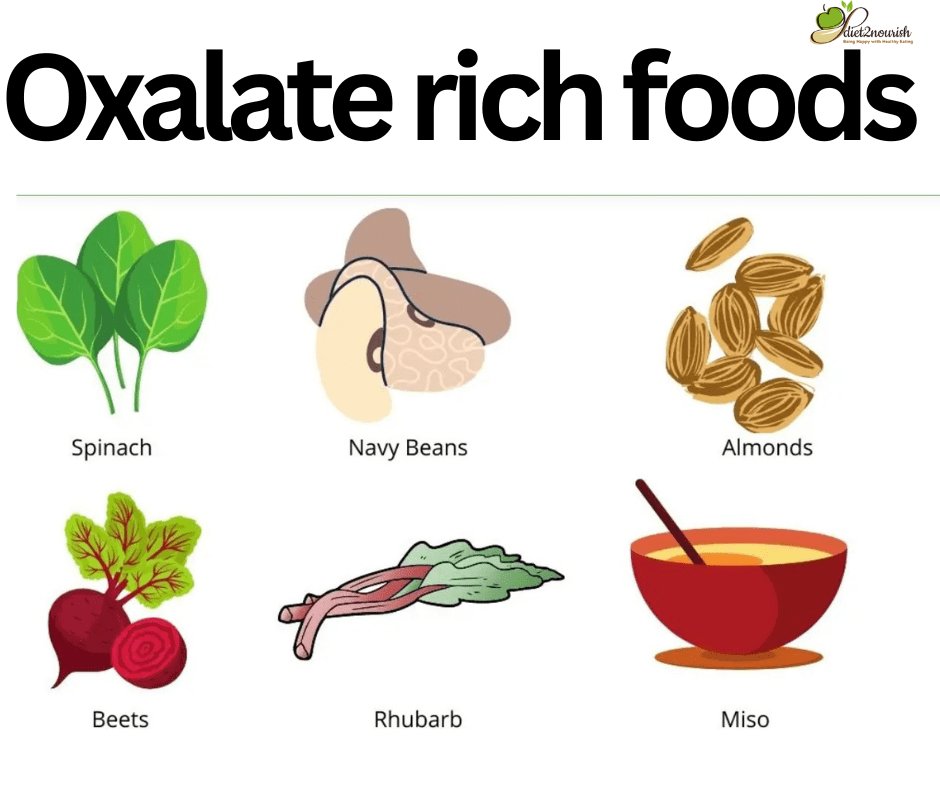
Here is a list of some foods that are high in oxalate. They must be avoided by people with kidney stones:
● Spinach:
Spinach is one of the most oxalate-rich foods, with 970 mg of oxalate per 100 grams of spinach.
● Rhubarb:
Rhubarb is another vegetable that is high in oxalate. It has 860 mg of oxalate per 100 grams of rhubarb.
● Beets:
Beets are high in oxalate, having about 140 mg of oxalate per 100 grams of beets.
● Swiss chard:
Swiss chard is a leafy green rich in oxalate. It has 660 mg of oxalate per 100 grams of Swiss chard.
● Almonds:
Almonds are a high-oxalate nut, with 470 mg of oxalate per 100 grams of almonds.
● Cashews:
Cashews are another high-oxalate nut. They have 220 mg of oxalate per 100 grams of cashews.
● Soy products:
Soy products such as tofu have 130 mg of oxalate per 100 grams of tofu. And soy milk has around 110 mg of oxalate per 100 ml of soy milk.
● Sweet potatoes:
Sweet potatoes are rich in oxalate, with 30 mg of oxalate per 100 grams of sweet potatoes.
● Lady finger:
Lady finger is a high Oxalate veggie with 146 mg of oxalate per 100 grams of okra.
● Chocolate:
Chocolate has a significant amount of oxalate. Approximately 67 mg of oxalate per 100 grams of chocolate.
● Tea:
Black tea and green tea are both high in oxalate, with 10-15 mg of oxalate per 100 ml of tea.
● Berries:
Berries include strawberries, raspberries, and blackberries. They are high in oxalate, with 10-30 mg of oxalate per 100 grams of berries.
Sample 7 day kidney stone meal plan
This diet to prevent kidney stones can help you have healthier kidneys without compromising your health:
Day 1:
– Breakfast: Lemon water, oatmeal with fruits
– Lunch: Brown rice, dal, cucumber salad or its raita
– Dinner: Grilled fish/ paneer for veg, with two atta rotis.
Day 2:
– Breakfast: Coconut water, idli with low salt chutney
– Lunch: Salad with veggies, pulao and raita
– Dinner: Chicken breast with toasts
Day 3:
– Breakfast: Watermelon smoothie
– Lunch: Brown rice, lentil soup, mixed greens salad
– Dinner: Grilled paneer and steamed broccoli salad
Day 4:
– Breakfast: Oatmeal with banana, a glass of almond milk
– Lunch: Whole wheat roti, dal, cucumber raita
– Dinner: Chicken rice with some mixed veggies in the side
Day 5:
– Breakfast: Lemon water, poha with veggies for a kidney stone diet chart
– Lunch: Brown rice, vegetable curry, side salad
– Dinner: Grilled fish or tofu for veg with some steamed asparagus
Day 6:
– Breakfast: Buttermilk with Vermicelli with veggies for a kidney stone diet chart
– Lunch: Brown rice, Mix veg., Dal side salad
– Dinner: Grilled tofu for saute veg.
Day 7:
– Breakfast: Lemon water, veg. uttapam for a kidney stone diet chart
– Lunch: Brown rice, Ghiya dal, side salad
– Dinner: Grilled chicken breast with saute veg.
Some of the best home remedies for kidney stones
Drinking water is always advocated as the best way to prevent kidney stones from occurring, however, water alone may just not be enough to help you all the time. Try these home remedies as mentioned below that can not only help in preventing kidney stone formation but can also ease you if you have developed stones in your kidneys. If you are looking for remedy then kidney Stone Diet Chart is the complete solution.
Up your citric acid intake:
citrus foods are great dietary resources that can prevent and can even break down the formed stones in your kidney.
Get enough calcium in your diet :
calcium binds to the oxalate and prevents it from being absorbed. Eating foods high in calcium can help in the prevention of kidney stones.
Increase your magnesium intake:
foods like tofu, avocado, and legumes are rich sources of magnesium, that can decrease oxalate absorption and reduce the chances of developing kidney stones.
Take apple cider vinegar:
apple cider vinegar has acetic acid that helps in dissolving kidney stones. Apart from it, it also helps in relieving the pain caused by kidney stones
Frequently Asked Questions (FAQ’s)
How can kidney stones be dissolved by diet?
Answer:
Kidney stones can be dissolved by modifying your diet. To dissolve kidney stones, you should reduce your intake of salt. Moreover, you must avoid animal proteins, and oxalate-rich foods. You should also increase your fluid intake, especially water. Drinking plenty of water can help in flushing out the minerals and other substances that can form stones. The more water you drink, the more diluted your urine becomes. This makes it less likely for minerals to crystallise and form stones.
Which fluids are worst for kidney stones?
Answer:
There are certain fluids that can lead to kidney stones. They include sugary drinks like cold drinks, soft drinks etc. Moreover, drinks that are high in oxalate, such as tea, coffee, and chocolate also pose a risk. Alcohol is also one of the worst beverages for kidney stones. All these fluids and drinks must be avoided if looking out for kidney stones.
What are some natural remedies for kidney stones that I can practise at my place?
Answer:
Some natural remedies for kidney stones include drinking lemon juice everyday preferably on an empty stomach. You can also consume apple cider vinegar mixed with water. In addition to this, pomegranate juice is a remedy in itself for kidney stones.
Does a high protein diet cause kidney stones?
A: Yes, as too much protein can raise calcium and uric acid levels in your urine leading to stone formation.
What food dissolves kidney stones fast?
A: You can eat watermelon for dissolving the stones in your kidneys as it is a hydrating fruit.
What drink removes kidney stones?
A: Lemon water and coconut water may help you with this as they can flush out kidney stones fast.
What fruit is bad for kidney stones?
A: In case of kidney stones, you might want to watch out your intake for star fruit and amla when it comes to fruits.