




When it comes to improving your health, losing weight, managing PCOS, controlling diabetes, or simply eating better, many people get confused between a dietitian and a nutritionist. Both professionals work in the field of nutrition, but their qualifications, expertise, and approach can be very different.
In today’s world, where social media is full of random diet advice and trending meal plans, choosing the right expert for your health has become more important than ever. A wrong nutrition plan can not only slow your progress but may also affect your overall health and lifestyle.
At our diet clinic in Delhi, we often meet clients who are unsure whether they should consult a dietitian or a nutritionist for their health goals. The truth is, the right choice depends on your body, medical condition, and long-term wellness goals.
In this blog, we’ll explain the real difference between a dietitian and a nutritionist, their qualifications, and who you should consult for weight loss, PCOS, diabetes, thyroid issues, and overall healthy living.
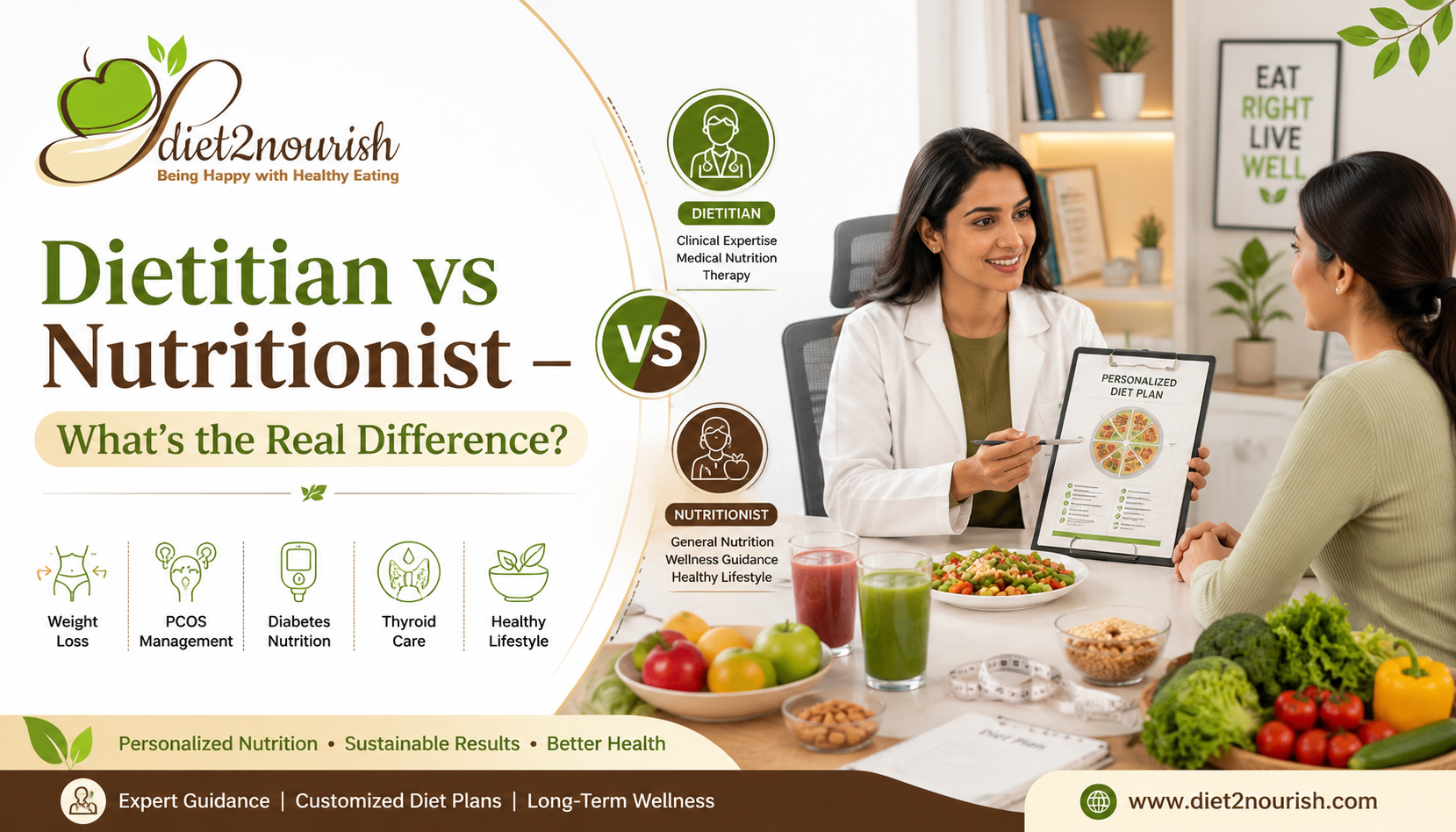
What Is the Difference Between a Dietitian and a Nutritionist?
Many people use the terms “dietitian” and “nutritionist” interchangeably, but they are not exactly the same. While both focus on food and nutrition, the level of medical training, certifications, and expertise can differ significantly.
Here’s a simple breakdown to help you understand:
| Dietitian | Nutritionist |
|---|---|
| Professionally trained in clinical nutrition and dietetics | May focus on general nutrition and wellness |
| Can help manage medical conditions through diet | Usually provides lifestyle and healthy eating guidance |
| Works with conditions like diabetes, PCOS, thyroid, cholesterol, and obesity | Often focuses on fitness, wellness, and basic nutrition support |
| Creates science-based and personalized meal plans | May provide general diet recommendations |
| Uses medical nutrition therapy when needed | Mostly focuses on preventive nutrition |
A certified dietitian usually has deeper knowledge of how nutrition affects different medical conditions and body functions. This is especially important for people dealing with hormonal imbalance, gut health issues, weight management, pregnancy nutrition, or chronic diseases.
On the other hand, nutritionists can also help improve eating habits and support a healthier lifestyle. However, for medical nutrition guidance and personalized therapeutic diet plans, many people prefer consulting an experienced dietitian.
That’s why understanding your health goals before choosing the right expert is extremely important.
Who Should You Consult: A Dietitian or Nutritionist?
Choosing between a dietitian and a nutritionist depends on your health goals, lifestyle, and whether you are dealing with any medical condition. While both can guide you toward healthier eating habits, the right expert can make a huge difference in your results.
You Should Consult a Dietitian If You Have:
- PCOS or hormonal imbalance
- Diabetes or high blood sugar
- Thyroid issues
- Obesity or stubborn weight gain
- High cholesterol or blood pressure
- Digestive problems
- Pregnancy nutrition concerns
- Emotional eating or unhealthy food habits
- Medical conditions that require personalized nutrition support
A dietitian can create a customized nutrition plan based on your body type, health reports, lifestyle, and long-term goals. Instead of promoting crash diets or shortcuts, the focus is usually on sustainable and realistic changes that work in real life.
You Can Consult a Nutritionist If:
- You want to improve your overall eating habits
- You are starting a healthier lifestyle journey
- You need basic wellness guidance
- You want help with balanced meals and healthy food choices
For general wellness support, nutritionists can also provide useful guidance and motivation. However, if your goal is related to medical nutrition, fat loss, hormonal health, or long-term disease management, working with a qualified dietitian is often the better option.
At our diet clinic in Delhi, we believe nutrition should never be one-size-fits-all. Every body is different, and the right diet plan should support your health, lifestyle, and long-term wellness naturally.
Why Choosing a Certified Dietitian Matters
Today, anyone on social media can call themselves a nutrition expert, which is why choosing a certified dietitian has become more important than ever. Your body, hormones, metabolism, and medical conditions require a personalized approach — not random internet diet trends.
A qualified dietitian understands how nutrition affects your overall health and creates meal plans based on science, medical understanding, and your individual needs. This becomes especially important for people dealing with PCOS, diabetes, thyroid imbalance, obesity, digestive issues, or emotional eating.
Instead of giving temporary solutions, a dietitian focuses on long-term health improvements such as:
- Sustainable weight loss
- Better metabolism and energy levels
- Hormonal balance
- Improved digestion
- Healthy relationship with food
- Better blood sugar and cholesterol management
- Realistic eating habits that fit your lifestyle
Many people fail with crash diets because those plans are not made for their body type or health condition. A personalized nutrition plan helps you achieve results without starving yourself or following extreme restrictions.
If you are searching for a certified dietitian in Delhi for weight loss, PCOS management, diabetes care, or healthy lifestyle transformation, always look for someone who focuses on practical, science-based, and sustainable nutrition guidance.
Dietitian vs Nutritionist for Weight Loss: Which One Is Better?
When it comes to weight loss, many people wonder whether they should consult a dietitian or a nutritionist. The truth is, successful weight loss is not just about eating less — it’s about understanding your body, metabolism, lifestyle, hormones, and eating habits.
A nutritionist may help you with general healthy eating tips and basic meal guidance. But if you are struggling with stubborn weight gain, emotional eating, PCOS-related weight issues, thyroid imbalance, or repeated dieting failures, consulting a dietitian can be more beneficial.
A certified dietitian looks beyond calories and focuses on:
- Your eating patterns
- Medical history
- Hormonal health
- Sleep and stress levels
- Daily routine and activity
- Nutritional deficiencies
- Sustainable fat loss instead of temporary weight loss
One of the biggest mistakes people make is following crash diets from the internet or social media. These diets may show quick results initially, but they are often difficult to maintain and can negatively affect metabolism, energy levels, and overall health.
A personalized diet plan helps you lose weight in a healthier and more realistic way without extreme restrictions. The goal is not just losing kilos quickly but building long-term habits that support your health and confidence.
At our diet clinic in Delhi, we focus on creating customized weight loss plans that fit your lifestyle, food preferences, and health goals — making your fitness journey practical, balanced, and sustainable.
Common Myths About Dietitians and Nutritionists
There are many misconceptions around dietitians and nutritionists, which often creates confusion for people trying to improve their health. Let’s clear up some of the most common myths.
Myth 1: Dietitians and Nutritionists Are Exactly the Same
While both work in the field of nutrition, their qualifications, clinical knowledge, and approach can differ. A dietitian is usually more focused on medical nutrition therapy and personalized diet planning for specific health conditions.
Myth 2: You Only Need a Dietitian If You Are Sick
This is one of the biggest myths. A dietitian can help not only with medical conditions but also with weight management, healthy eating habits, fitness goals, hormonal balance, gut health, and overall wellness.
Myth 3: Weight Loss Means Eating Less
Healthy weight loss is not about starving yourself. In many cases, eating the right foods in the right quantity at the right time matters more than simply reducing calories. Sustainable nutrition always works better than extreme dieting.
Myth 4: All Diet Plans Work for Everyone
Every person has a different body type, metabolism, lifestyle, and health condition. A personalized nutrition plan gives much better results than following random diet charts from the internet.
Myth 5: Healthy Food Has to Be Boring
Balanced nutrition does not mean eating tasteless meals every day. A good dietitian helps create meal plans that are nutritious, practical, and enjoyable so that healthy eating becomes easier to maintain long term.
Understanding these myths can help you make smarter health decisions and choose the right guidance for your body and lifestyle.
Looking for a Trusted Dietitian in Delhi?
Choosing the right nutrition expert can make a huge difference in your health journey. Whether your goal is weight loss, PCOS management, diabetes care, thyroid balance, or simply building healthier eating habits, personalized guidance always works better than generic diet plans.
At our diet clinic in Delhi, we focus on creating practical, science-based, and sustainable nutrition plans designed according to your lifestyle, food preferences, and health goals. Instead of promoting extreme dieting or temporary fixes, our approach is centered around long-term wellness and realistic results.
We help clients with:
- Healthy and sustainable weight loss
- PCOS and hormonal health management
- Diabetes and cholesterol-friendly diet plans
- Thyroid nutrition support
- Pregnancy and post-pregnancy nutrition
- Personalized meal planning
- Lifestyle and habit transformation
Our goal is not just to help you lose weight but to help you build a healthier relationship with food and your body.
If you are searching for a certified dietitian in Delhi who understands your health goals and provides personalized nutrition guidance, book your consultation today and take the first step toward a healthier lifestyle.
FAQs About Dietitian vs Nutritionist
Is a dietitian better than a nutritionist?
A dietitian is often preferred for medical conditions like PCOS, diabetes, thyroid issues, obesity, and digestive disorders because they provide more personalized and clinically focused nutrition guidance. Nutritionists can also help with general wellness and healthy eating habits.
Who should I consult for weight loss: a dietitian or nutritionist?
If your weight loss journey involves hormonal imbalance, emotional eating, slow metabolism, or medical conditions, consulting a dietitian can be more beneficial. They create customized plans based on your body and health goals.
Can a dietitian help with PCOS and thyroid problems?
Yes, a certified dietitian can help manage PCOS and thyroid-related symptoms through personalized nutrition planning, balanced eating habits, and lifestyle modifications.
Is a nutritionist medically certified?
Not all nutritionists have clinical or medical training. Qualifications may vary depending on certifications and educational background. That’s why it’s important to check experience and expertise before consulting.
Do dietitians only provide weight loss diets?
No, dietitians help with many health concerns including diabetes management, cholesterol control, pregnancy nutrition, digestive health, hormonal balance, and overall wellness.
Are online diet consultations effective?
Yes, online consultations can be very effective when the diet plan is personalized according to your health condition, lifestyle, and goals. Many people successfully achieve long-term results through virtual consultations.