






As simple as a balanced diet may sound, it can be hard to include in your daily life. In fact, adulthood is all about balancing your work life, personal life and social life. But what does not get balanced is your diet! If you struggle to maintain a healthy diet and lifestyle, then this is your call. It is time that you prioritise your health and switch to a balanced diet designed by the Dietician for Weight Loss and dive into its science for a better adulthood.
What is a balance diet?
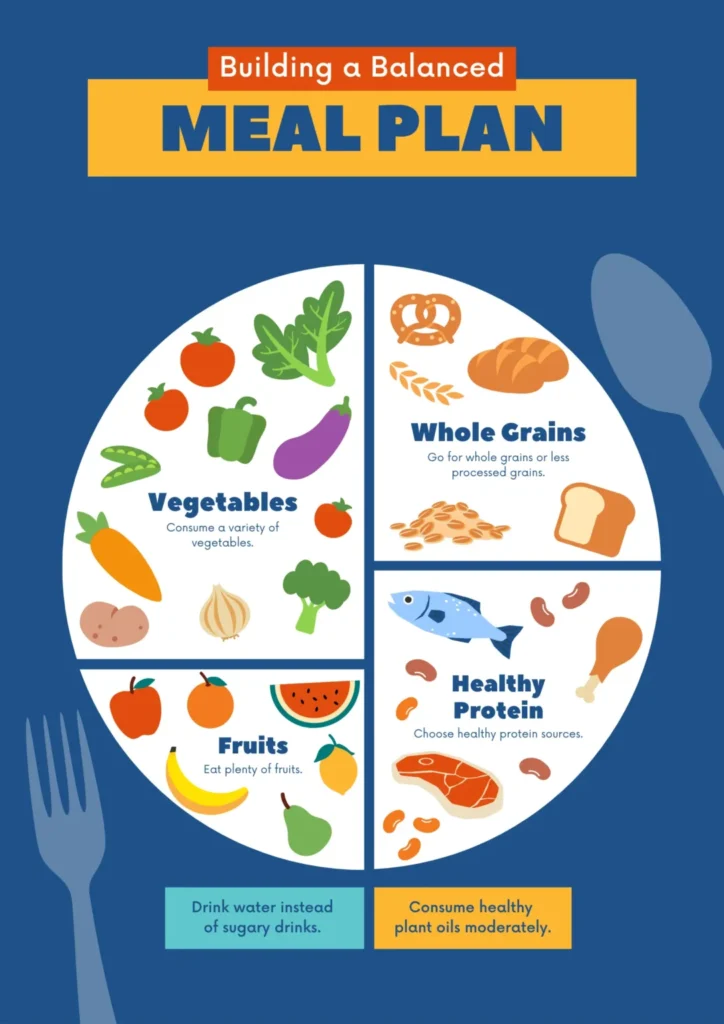
A balanced diet is the one that completes all the nutritional requirements of a person’s needs in the body. This diet provides all the nutrients a person requires without avoiding the recommended daily calorie intake.
As per the rule of a balanced diet, the fruits and vegetables should be one half of your plate. Then, the remaining half should contain proteins and grains. A Balanced diet chart is good for your physical and mental health.
Benefits of balance diet
A meal plan that ensures your health has many other perks like:
- Help you live longer and healthier.
- Keeps teeth, skin and eyes healthy.
- Supports muscles.
- Boosts immunity.
- Lower the risks of cancer, chronic diseases, heart disease, type-2 diabetics.
- Helps to elevate digestive system function.
- A balanced diet will improve your sleep
- Have good energy levels.
- Maintains weight
- Good for your brain function.
Components of balanced diet chart
1. Carbohydrates
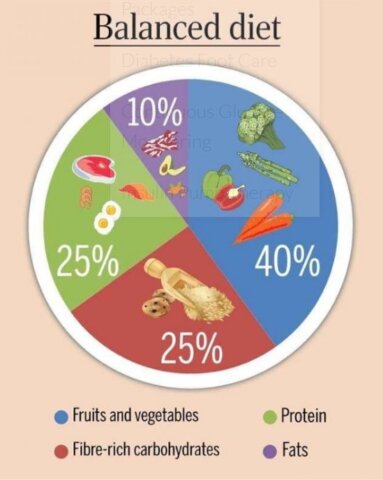
60% of your balanced diet should have complex carbs like whole grains. Most of the energy needs are met by these good carbs.
2. Protein
Around 25% of daily calories should come from protein. Include pulses (moong dal, urad dal), legumes (kidney beans, black-eyed beans, chickpeas), eggs, fish, lean meat milk, and milk products (paneer, curd, cheese) in your diet.
3. Fats
About 15% of daily caloric needs are met by fats. They are also crucial for storing and providing vitamins and synthesizing hormones. However, use these in moderation.
4. Fiber
Fibre is an interdisciplinary nutrient which controls blood sugar levels, bowel function, and bowel health. Your daily dietary fiber intake should be around 18g.
5. Vitamins and minerals
Classified as micronutrients, they support metabolism, nerve functions, muscle functions, bone health, and cell production.
6. Water
Your balanced diet should have the apt hydration strategies to make it effective.
Planning for a balanced diet chart
If you are planning a balanced meal plan for yourself based on the components, then here are some tips from expert dieticians:
● Prepare a meal plan-
Making a weekly meal plan will help you to have a balanced diet. You must plan your meals and snacks as per your schedule, so that you can eat all kinds of foods in your day in a balanced way.
● Grocery shopping-
Keeping healthy foods from each food group in your kitchen will help you stick to the plan. You can shop for fresh fruits, vegetables, dairy (like low-fat milk, yogurt, and cheese), and lean proteins (chicken, fish, meat) as they fall within the components of balance.
● Help from dietician/nutritionist-
A dietitian is a nutrition expert that can give you better guidance on balanced diet charts and healthy eating. By this you will be able to educate yourself on the benefits of a balanced diet. Hence, you will get to know where you lag.
● Eat three meals daily
Eating 3 or more meals a day would make it easier for you to get all the vital nutrients your body requires every day. By skipping meals, you may jeopardise your body needs. Daily snacks and meals in a balanced diet offer you a stable flow of energy to your brain and this way blood sugar level helps the brain function well.
Why should you follow a balanced diet chart?
Your body needs proper nutrients and healthy fats, minerals and energy in a proper proportion. Health is wealth, a popular quote signifies the importance of health and healthy lifestyle. To maintain a healthy lifestyle a balanced diet chart plays a major role.
When it comes to implementation of a balanced diet people think it’s very difficult to follow, but it requires some dietary habit changes and a balanced diet chart according to your body needs.
The basic rule of healthy eating is the proportions in which the foods are introduced in your system. For example, if you consume processed sugar, it will give you a quick source of energy. By replacing it with natural sugar from fruits. it will get absorbed gradually in your system.
Balanced diet chart for a week
Monday
Early morning | Lemon water |
Breakfast | 1 cup vegetable Poha + ½ boiled corn +1 cup watermelon |
Mid Morning Snack | 1 cup buttermilk with a handful of walnuts |
Lunch | 1 cup jeera rice+1 cup mixed dal+1 cup stir fry vegetables+ 1 cup cucumber+ 1 cup curd |
Evening Snack | 1 cup tea/coffee with biscuits |
Dinner | 2 phulkas +1 cup chana masala +1 cup boondi raita |
Bed Time | 1 glass skimmed milk |
Tuesday
Early Morning | 1 glass juice made of green leafy vegetables |
Breakfast | 1 cup museli with milk+1 moong dal chilla+ 1 cup papaya |
Mid Morning Snack | 1 cup clear vegetable soup |
Lunch | 1 cup steamed rice +1 bowl kadhi +1 cup boiled veggies+ slices of carrot , onion, cucumber |
Evening Snack | 1 cup Roasted Chana |
Dinner | Multi grain Chapati+ Aloo Gobhi + curd |
Bed Time | Turmeric Milk |
Wednesday
Early morning | 1 glass orange juice |
Breakfast | 2 Poached Egg+ 2 slices of toast+1 cup baked beans +1 cup mixed fruit |
Mid Morning Snack | Methi Khakra + buttermilk |
Lunch | Sphagetti with grilled chiken + roasted veggies |
Evening Snack | 1 cup Roasted Chana |
Dinner | Taco salad with mushrooms + carrot stew |
Bedtime | A handful of Watermelon seeds |
Thursday
Early Morning | 1/4 cup of overnight soaked fenugreek water |
Breakfast | 2 pieces of multi grain idli + 1 cup green chutney+ 1 cup oranges |
Mid Morning Snack | Methi Khakra + buttermilk |
Lunch | 2 bajra roti+ mix veg shaak + sweet potato salad |
Evening | Millets and dates porridge |
Dinner | Radga Pattise + lauki and Tomato soup |
Bed Time | Skimmed Milk |
Friday
Early Morning | Warm Water with Wheatgrass powder |
Breakfast | 1 cup rava khichdi +1 cup coriander chutney+1 cup pears |
Mid Morning Snack | 1 cup sweetcorn chaat |
Lunch | 1 cup biryani+1 cup mix raita+1 cup masala soya kabab |
Evening Snack | Tea+Crackers |
Dinner | 2 multigrain roti+ veg curry |
Bed Timr | 1 glass skimmed milk |
Saturday
Early Morning | Water with tulsi Drops |
Breakfast | 1 cup cornflakes with milk+ mixed fruits |
Mid Morning Snack | 1 cup clear vegetable soup |
Lunch | 1 cup mango pulao+ 1 cup paneer/chicken gravy+1 cup salad |
Evening Snacks | Figs and Almond |
Dinner | 2 multigrain roti+ veg curry |
Bed Time | Skimmed Milk |
Sunday
Early Morning | 1 glass warm water with lemon, honey and ginger |
Breakfast | 1 cup poha with nuts+1 cup fruit trail mix+1 cup/tea |
Mid Morning Snack | Baked baby potatoes |
Lunch | 1 cup boiled rice +1 cup palak paneer +1 cup stir fry broccoli+curd |
Evening Snack | 1 cup phool makhana |
Dinner | 2 phulkas + dal tadka+onion salad |
Bed Time | Turmeric milk |
Frequently Asked Questions (FAQs)
1. How can I create a balanced diet chart?
Prepare a meal plan where you plan meals and snacks accordingly. Shop healthy and store fresh fruits and veggies for cooking. Moreover, you can get help from a dietician/nutritionist. Eat three meals daily to accommodate all the vital nutrients that your body requires every day.
2. What foods should I avoid in a balanced diet chart?
Processed foods · Refined grains · Refined sugars · Soft drinks · Red and processed meats · Saturated and trans fats · High-glycemic foods
3. What are the best herbs and spices to use with a balanced meal plan?
You can use turmeric, garlic, basil etc in your balanced diet as they are rich in flavour as well as benefits.