






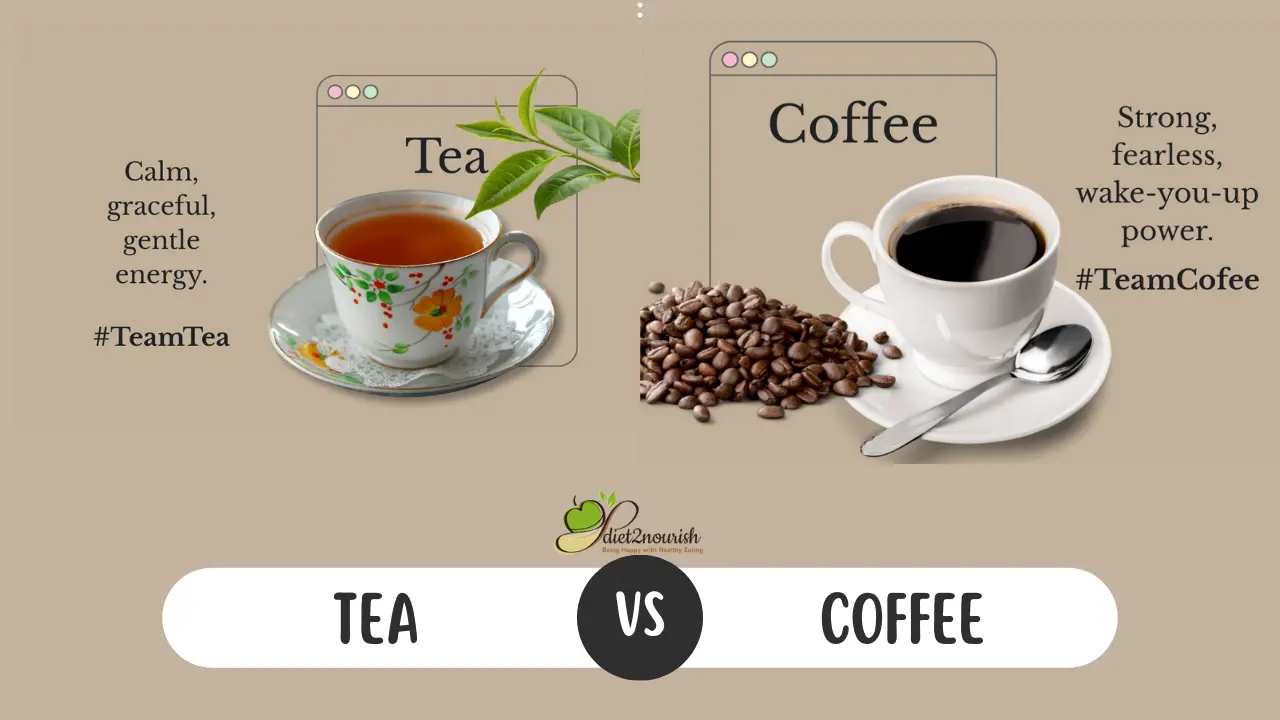
World War III was not as controversial as the tea vs coffee dilemma. If you find yourself confused between which caffeine rich drink to have to boost your day with a head start, don’t worry. There is a lot more about tea and coffee than you know. Once you surf through their basics, you will find your go-to drink.
The caffeine breakdown: Tea Vs Coffee
Your dilemma about tea vs coffee is about to get sorted. While coffee and tea both rely on caffeine in them to sharpen your mind, or so may you feel. But both the options have a different way to deliver that energy.
A standard cup of coffee can give you 95–200mg of caffeine. Thereby, pumping you with a rapid, intense spike in alertness. It might work for you in certain aspects. In contrast, tea can fuel your body with a milder 30–70mg but has a secret weapon: L-theanine.
It is an amino acid that works well with caffeine to slow its absorption. Therefore, giving your mind a “calm focus” rather than a sudden jolt. Being the basic of caffeine in tea vs coffee breakdown, it may help you make the right choice.
Caffeine in coffee vs Tea vs green tea
To help you go through your options and make a wiser choice, here is a tabular form of the most popular teas.
| Beverage type | Average caffeine (mg) |
| Brewed coffee | 95 mg |
| Espresso shot | 63 mg |
| Black tea | 47 mg |
| Matcha Green tea | 70 mg |
| Brewed green tea | 28 mg |
Impact on lifestyle and daily productivity
The right choice in the war of tea vs coffee can shift the entire trajectory of your workday.
- Coffee, being your “kickstarter,” can charge you with a rapid surge of adrenaline and dopamine. Since it is perfect for a demanding morning or clearing a dense mental fog, you can choose your weapon.
- However, this intensity often comes with a “shelf life” or what you may call an expiration date. It can lead to a mid-day energy crash that may mess up your focus later in the day.
- In contrast, tea presents itself with more of a “marathon” lifestyle. Thanks to the productive relationship between caffeine and L-theanine. In addition, many tea drinkers claim a sustained state of “calm focus” rather than a frantic peak.
- This makes it an ideal choice of drink for deep work, creative sessions, or long afternoons. Especially the ones in which your mental endurance is prioritized over immediate speed.
Acidity levels in tea vs coffee
The tea vs coffee war is also driven by another factor, acidity. Coffee sits at a more acidic pH of 4.8 to 5.1. It can lead to gastric acid and trigger reflux too. On the other hand, most teas are milder like black tea averages a pH of 5.0 to 5.5. The green tea is often near-neutral and gentler on the stomach
Caffeine in tea vs coffee: which is better?
Both beverages have their caffeine content and the different ways they impact your focus. The choice between tea vs coffee should be as per the outcome you expect from yourself.
The Verdict: Which One Should You Choose?
Ultimately, your choice dictates how your day will go. You may choose coffee for a powerful sprint to the finish line, or tea for a balanced, steady flow that carries you through to the evening.
● Best for Early Birds:
With the volts of energy coffee offers, it wins the 6:00 AM slot.
● Best for Deep Work:
With the calm focus in it, tea wins the afternoon grind.
Frequently Asked Questions:
Q: What to keep in mind if you drink too much coffee?
Q: Is having a bed tea empty stomach safe?